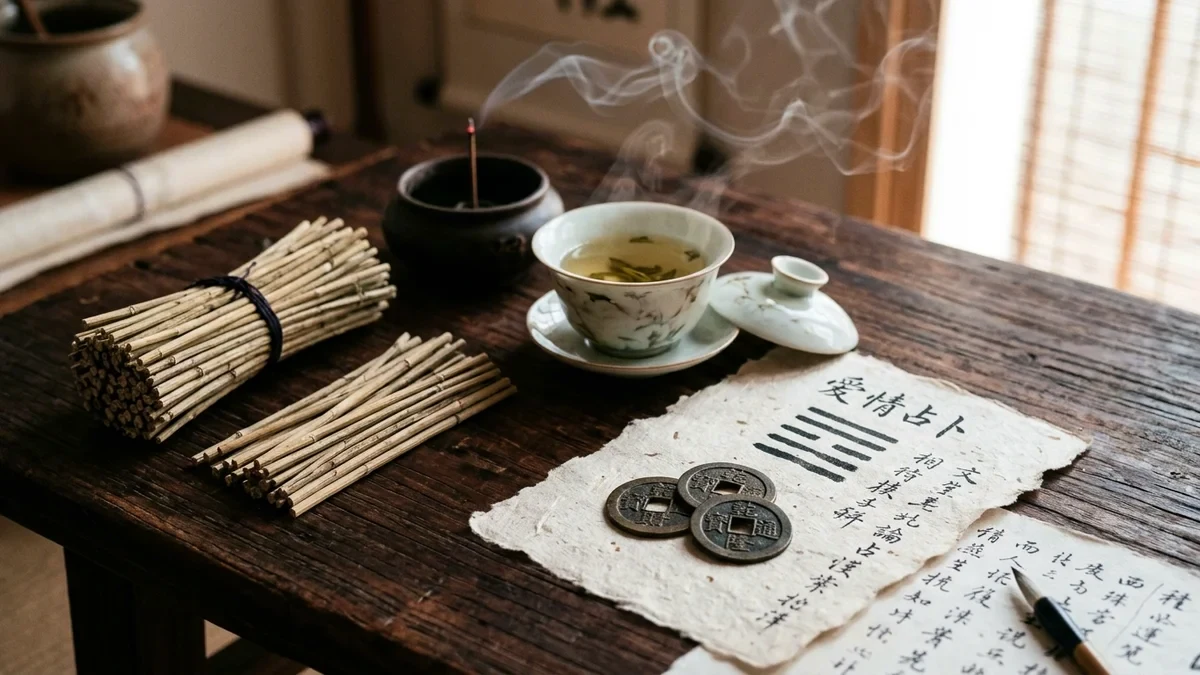
Hexagram 10 in the I Ching: Treading (Lu), Walking on the Tiger’s Tail, and Polite Grace

Visual Guide: Hexagram 10 in the I Ching: Treading (Lu), Walking on the Tiger’s Tail, and Polite Grace
The Quick Answer
Hexagram 10 (Lu / Treading) teaches the art of walking through danger without getting hurt! Its famous ancient metaphor is "Treading upon the tail of the tiger: it does not bite the man. Success." Composed of Heaven above Lake, it shows that when dealing with powerful, volatile people or delicate situations, polite courtesy, calm respect, and cheerful grace keep you 100% safe.
Heaven Over Lake: The Gentle Art of Treading
In the I Ching, Qian (Heaven/Power) sits above Dui (Lake/Joy). Heaven is strong and majestic, while the Lake is cheerful and yielding. Because the Lake knows its place and treats Heaven with respect, Heaven smiles upon it.
Think of encountering a sleeping tiger in the jungle. If you start screaming, poking it with a stick, or acting arrogant, the tiger will instantly wake up and attack. But if you walk with soft, respectful steps and mindful awareness, you slip past unharmed.
Richard Wilhelm writes that Hexagram 10 governs conduct, manners, and etiquette. When you treat difficult people with polite grace, you disarm their anger before it can start.
Handling Volatile Bosses and Delicate Negotiations
In career and business, this hexagram frequently appears when dealing with demanding clients, strict authorities, or volatile executives.
Do not challenge their ego directly or pick petty fights. Follow protocol, deliver your work with calm professionalism, and remain cheerful. Your tact will earn their respect and keep you secure.
Love and Difficult Relationship Conversations
If you need to discuss a sensitive topic with a partner who is easily offended, Hexagram 10 is your guide. Approach the conversation with gentleness, validate their perspective, and avoid accusatory language.
Soft words break hard bones. When you speak without hostility, your partner will listen without putting up defensive walls.
Everyday Wisdom: Self-Awareness
Watch your own steps. Are you speaking carelessly or making reckless assumptions? Mindful awareness and emotional poise ensure that every move you make leads toward safety and success.
Want a Personalized Answer Right Now?
Try our free interactive calculators and AI readers to ask about your specific situation:
Frequently Asked Questions
References & Sources:
- The I Ching or Book of Changes by Richard Wilhelm & Cary F. Baynes (Princeton University Press)
- The Complete I Ching by Master Alfred Huang (1998) (Inner Traditions)